


Many of my coaching clients are asking questions how to manage a remote work force with self-imposed quarantine for their staff.Companies that have never operated remotely as well as those who allow remote working on a once or twice a week basis are trying to learn what is important to lead their teams. Almost all managers are saying they don’t want to micro-manage, but how do you define micromanagement when you’re not in the same office?
With the proliferation of COVID-19, we are seeing governments step in with restrictions to gatherings in public places. Businesses are also adopting polices of remote working for their staff. With these changes, many leaders and employees are unsure how to operate effectively.
For leaders, trust and open communication is key. You need to establish clear lines of communications and define the boundaries which you will operate. Be as transparent as possible with information. Messages should be around:
- Expectations of remote working: How will you gauge an employee’s success? Do performance measures remain the same? How often will you check in? Do you need to revisit expectations?
- Support structure: This applies to employees as well as customers/clients. Not only will your employees be going through these changes, but your clients probably are as well. What changes to your service are needed, or does the timing for engagement alter?
- Organizational changes: If the quarantine lasts a certain time, is there the possibility or probability of job cuts? What criteria will you use? If the employee can’t find a new position when the crisis is over, is there the possibility to rehire?
For employees, all the above holds true as well. Communication and trust run both ways. With remote working the communication needs to increase until there is an established comfort with the new arrangement. In addition, ask questions. Conversations that aren’t normally had will most likely increase in frequency. You can read my blog how to make these more effective and valuable. In addition, how will you manage distractions? What techniques will you use to manage family, pets, neighbors, and online/entertainment distractions? How will you be aware if this is becoming a problem? Motivation is another key adaptation. What can you do to avoid feeling isolated or too remote? Getting up and going for a walk, talking to colleagues, and even short exercise sets are great motivators.
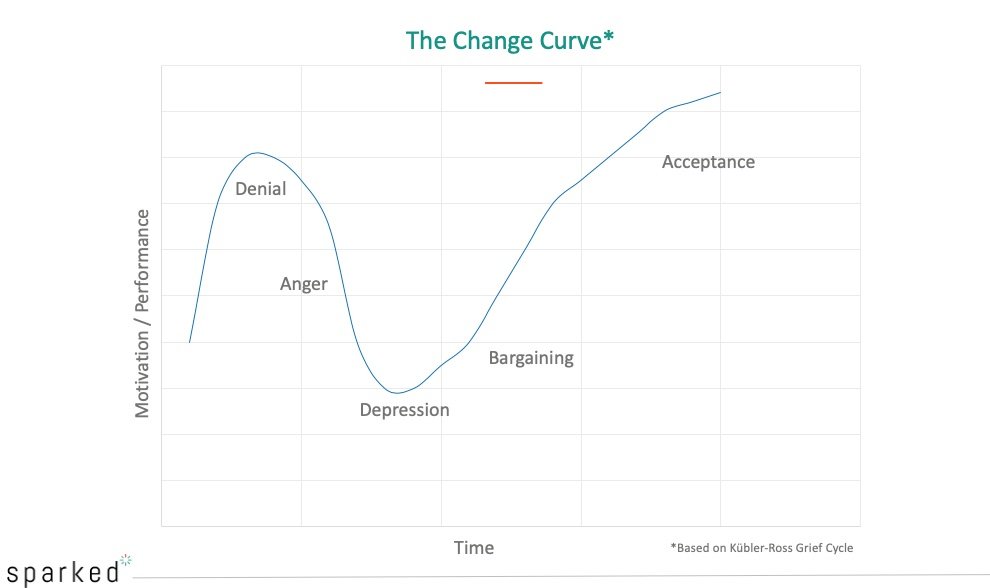
For everyone, recognize that this situation is aHUGE change. When people go through change, there is a predictable manner of operation that aligns to the Kübler-Ross grief cycle. It is important to recognize and respect where someone is on the change curve, because we all go through it at different rates. In addition, while it’s typically displayed as a progression over time, we can always revert to previous phases and need to progress from there. Creating awareness of this change process is a great way to open transparent dialog among your team. Some teams are comfortable sharing with others where they land on the curve, thus enabling appropriate support.
It is times like these where coaches can provide an unbiased view of a client’s situation in a safe, judgement-free space. Times like these, employees and employers sometimes second guess, or let their imaginations run rampant. There are tools and techniques coaches can provide that help reduce the anxiety, tension, and even stress in these uncertain periods. How can I help you? Click here to schedule a meeting where we can discuss your needs, no obligation.